- Visionary Insights
- Posts
- Phoenix x Visionary Insights
Phoenix x Visionary Insights
Special Surprise Guest Edition

Lily Leaphart
March 03, 2026 • Estimated Reading Time: 6 minutes
MEET TODAY’S GUESTPhoenix—an artist, future art therapist, and deeply thoughtful humanPhoenix is a multidisciplinary emerging artist based in Pittsburgh. Her work has been exhibited in several galleries and showcases across the United States. She is passionate about the intersection of art and mental health, and she is working to complete her Master of Arts in Art Therapy at Seton Hill University. Through her work, she explores creative expression as a tool for healing and connection. She also shares her artistic process and insights with an engaged community on various social media platforms. When she’s not in the studio, Phoenix enjoys spending time with family, playing games with friends, and doting on her two cats. | 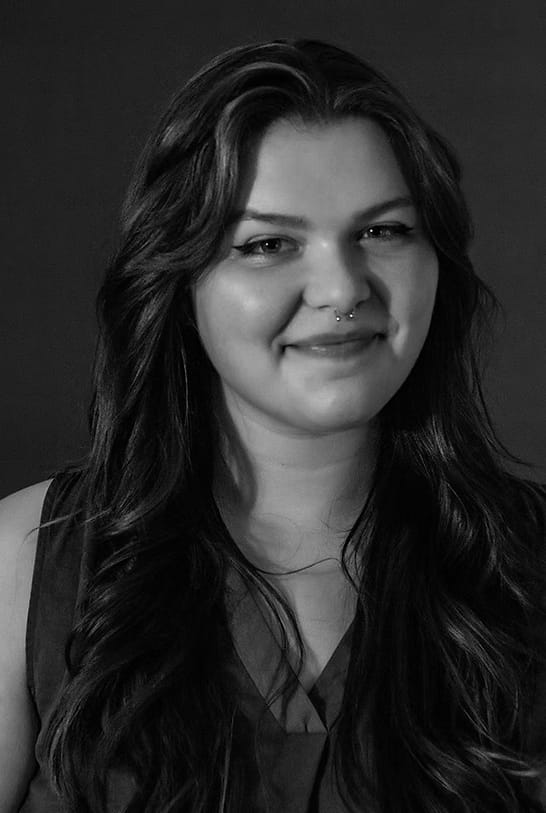 |
THE INTERVIEW
Why So Many Artists Feel Behind (and Why It’s Not a Personal Failure)
Last week, I had a grounding conversation with Kyra Carlson aka Phoenix—about something many creatives whisper to each other but rarely say out loud:
Why does making art feel so challenging… and surviving as an artist feel so impossible?
What unfolded was a bit of a rant with plenty of reckoning sprinkled in.
The Myth We’re Given as Young Artists
Art school teaches you how to make—but not how to live.
As we spoke I shared with Phoenix something I’ve experienced, and heard echoed by countless artists:
we know how to paint, sculpt, critique, and experiment—but we are left without skills for how to network, apply for grants, navigate commissions, market ourselves, or plan a sustainable practice.
There’s an unspoken assumption baked into many art programs:
Most of you won’t actually become full-time artists.
If you do? You’re expected to “figure it out.”
That realization lands heavy—especially for artists who never treated art as a hobby.
Find your community. Chances are your friends and family have “normal jobs” and aren’t going to understand what you’re going through. It is incredibly motivated to be part of a community with similar dreams.
– Sarah Miller, founder of
Where Art School Falls Short
Phoenix and I have had a few conversations on our arts practice, and we ended up finding out that we both graduated fully trained in how to make art — but that after a bit of college education and real-world experience, we were a bit unprepared to sustain a life as artists compared to the skills we found ourselves needing.
We would graduate with little preparation for practical skills, such as applying for shows and grants, pricing work, marketing, taxes, and navigating gallery commissions. These were never taught. Phoenix and I, along with so many artists, are left to teach ourselves the business side after graduation— a gap that can make an already challenging path feel unnecessarily isolating. I have had a hard time figuring out these skillsets for myself, even with master’s level business courses - arts business is a different extreme sport.
Celebrate the little wins and enjoy the fact that you’re doing what you love. Don’t take it for granted.
– Justin Erickson, founder of Justin Erickson Art
TODAY’S HOT TAKE
The Financial Privilege Nobody Likes to Name
We talked candidly about something the art world avoids discussing openly:
many successful artists have structural support—a partner with a steady income, family backing, or financial cushioning that allows them to take creative risks.
That doesn’t diminish their talent.
But pretending success is purely about hustle and vision erases reality.
As Phoenix put it (and I couldn’t agree more):
art careers aren’t just built on passion—they’re built on time, stability, and access.
And from my perspective I have seen access is uneven. But no one really addresses it.
 |  |
Pictured above on the left: “...all else is prelude.” 2025 oil on canvas
on the right: In the Trenches 2026 oil on canvas
Read more about Phoenix’s paintings here
Grants, Proposals, and the Mismatch of Language
Then there’s the grant system.
On paper, it exists to support artists.
In practice, it often asks intuitive, experimental creators to explain their work in rigid, managerial language before the work even exists.
For artists who work through feeling, embodiment, and discovery, this can feel paralyzing.
It’s not that artists lack clarity.
It’s that the system doesn’t speak their language.
Phoenix and I agree - artists are intuitive and shouldn’t have to change, we just need to focus on building system better suited for creatives.
Speaking of better systems and better worlds for artists (or humans in general) I asked Phoenix what’s next for her and got a pretty cool insight into how her work in art therapy is more than just a degree.
What's the word? I feel like I'm being forged.
“I feel like I'm just being made into a better human being.
I've got two more years. Ultimately, I find that art therapy and my art really inform each other. It's been really interesting, my art is fully influenced by humans and human relationships and the duality between how someone that we love can be both like someone that brings us such joy and warmth, but also someone who hurts us really deeply. And I kind of feel like that is what art therapy can be about. And how do I support someone when I've got my own stuff going on?”
-Phoenix
Art as Survival, Not Luxury
Phoenix is pursuing a master’s in art therapy—using art not just as output, but as communication, processing, and healing.
That reframed something important for me.
So many artists aren’t making work to decorate.
They’re making work to metabolize grief, fear, joy, identity, and human connection.
Art isn’t “extra.”
It’s how many of us stay alive inside ourselves.
Science may keep us breathing—but art is what makes life worth continuing.
medicine, law, business, engineering, these are noble pursuits and necessary to sustain life. But poetry, beauty, romance, love, these are what we stay alive for…
North Star Tracking
Where This Leaves Us
Here’s the truth I keep returning to:
If you feel behind, scattered, exhausted, or conflicted as a creative—
it’s not because you’re failing.
It’s because you’re trying to translate a soul-based practice into systems that were never designed for it.
And yet… when structure does meet creativity—when business supports art instead of swallowing it—something magical happens.
That’s the work where community comes to the rescue.
Building bridges instead of forcing choices.
Fare-ly Sweet (2026) oil on canvas by Phoenix

What This Means for Artists
If you’re an artist or creative reading this and quietly thinking “Why does everyone else seem to have it figured out?” — pause.
This conversation offers a few grounding truths:
You are not behind.
Most creative education systems train taste and technique, not sustainability. Confusion after graduation isn’t failure — it’s a gap you were not taught to cross.Struggle does not invalidate your talent.
Financial ease and creative success are often correlated, not causal. Your pace says nothing about your worth or potential.If grants, proposals, or marketing feel misaligned, that’s not a flaw in you.
Many systems were built for predictability, not intuition. Learning to translate your work doesn’t mean betraying it — it means protecting it.Your art doesn’t need to justify its existence.
If your work helps you process, survive, understand, or connect — it is already doing something essential.You are allowed to want both meaning and stability.
The future of creative work isn’t choosing between soul and structure — it’s designing systems that let both coexist.
Let this be your permission slip to stop internalizing systemic gaps as personal shortcomings.
The Myth of “Somewhere Else”
One of the quietest but most important moments in my conversation with Phoenix was this reminder:
The capacity to do your best work does not live in a city, a residency, a degree, or a future version of yourself.
It lives inside you.
We’re often taught—subtly or explicitly—that our creativity will fully arrive once we get somewhere else.
Berlin. New York. Paris.
The right program. The right audience. The right season of life.
But Phoenix gently named what I think many of us need to hear:
If your work is honest, embodied, and alive — it will be honest, embodied, and alive anywhere.
Place can inspire.
Community can nourish.
But no location creates the artist.
That realization landed deeply for me. I noticed how often I’ve been chasing environments, believing they would unlock something I felt just out of reach. This conversation helped me return to a steadier truth: as long as I am making art — listening, responding, processing — I am already where I need to be.
Your imagination doesn’t need permission.
Your work isn’t waiting for you to arrive somewhere else.
It’s waiting for you to trust that it’s already yours.
Phoenix reminded me that the ability to make my best work has never been somewhere else waiting for me — it has always lived within me. And this is why artists need artists - we just get it, and when we run into existential dread, a creative rut, or identity crisis (sometimes so dramatically I have hit all 3) our art friends can ground us and bring us back down off that cliff of lies. Bringing our feet to steady ground and our heads in the clouds (in the best way possible:)
Highlight
Phoenix
Caught in Cascade (2025)

Caught in Cascade (2025)
Featured Exhibition
Before you close this tab, I want to highlight something important.
Phoenix is opened her first solo exhibition, As You See It, on February 26 at the Holland Area Arts Council in Michigan.
The show brings together painting, sculptural fragments, and process-driven work that reflects Phoenix’s deeply human approach to art — work rooted in relationship, perception, and emotional honesty. The reception is accompanied by a hands-on workshop, on March 28, exploring play, material experimentation, and new ways of seeing.
If you’re near Michigan (or know someone who is), this is one of those shows worth showing up for.
Otherwise, you can explore more of Phoenix’s work at phoenixdesigns.art and follow along on Instagram @aka.phoen1x.
Support living artists. It matters more than you think.